Before We Learned to Read, We Learned to Listen
There is a moment that happens almost every day, though we rarely stop to notice it.
Someone asks how your day was.
You don't respond with a spreadsheet of events. You don't list your heart rate, your calorie intake, or the exact number of emails you answered. You don't organize your memories chronologically or alphabetically.
You tell a story.
You begin somewhere. You skip over things that didn't matter. You linger on the parts that did. You create tension. You introduce people. You imitate voices. You build toward a moment worth telling. Without realizing it, you've edited reality into something another human being can carry with them.
It makes me wonder if stories were ever something we invented.
Or if they were simply something we discovered—like gravity or fire—because they had been quietly shaping us all along.
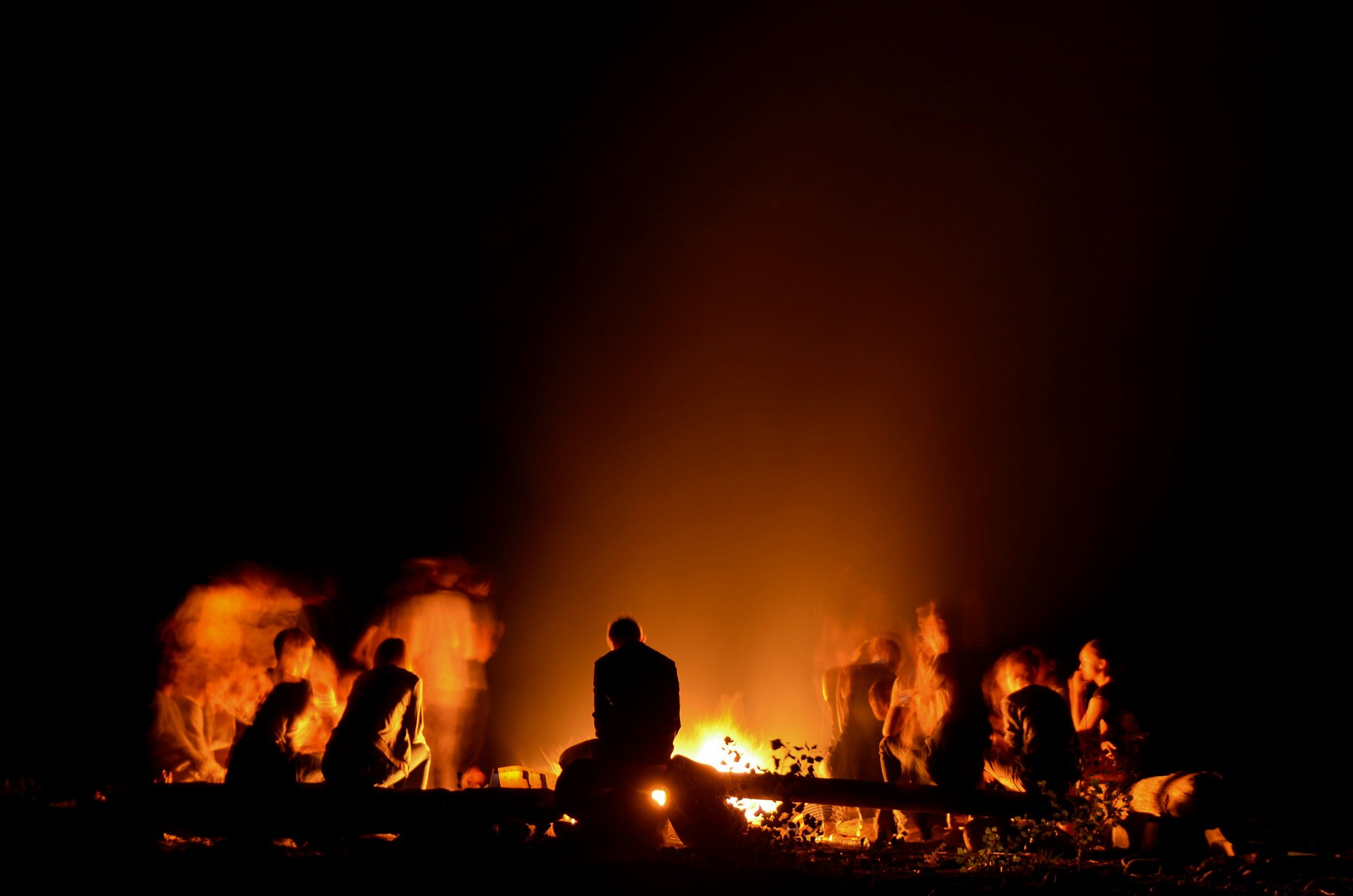
Long before we carved words into stone or pressed ink onto paper, there were nights gathered around fires. The darkness beyond the flames held predators, weather, uncertainty, and everything that refused to explain itself. Around those fires, people began arranging experience into patterns.
Instead of "Don't walk near that river after sunset." The elders would tell the story of the hunter who ignored the warning and never returned. while one would be remembered because it is true. The other is remembered because it feels true, and there's a huge difference.
Memory has always been selective. It isn't a warehouse where every moment is carefully labeled and stored. It behaves more like an editor than an archivist, trimming scenes, emphasizing emotion, rearranging events until they make sense together. The moments that stay with us are rarely the most detailed. They're the ones attached to surprise, fear, joy, grief, embarrassment, hope.
Emotion acts like a bookmark.
Perhaps that's why some childhood afternoons remain impossibly vivid while entire years of adulthood blur together. We don't remember everything that happened. We remember what changed us.
A story doesn't preserve every fact. It preserves the meaning. That idea stretches far beyond books and films. It's woven into the way the mind itself seems to work. Think about how quickly we search for explanations after something unexpected happens. A friendship ends, a business fails., a dream finally becomes reality. Almost immediately, we begin asking why.
Not because we enjoy uncertainty, but because the human mind seems uncomfortable leaving events disconnected. We pull invisible threads between moments until they resemble a pattern. Sometimes those patterns are accurate, Sometimes they aren't. But we look for them anyway. Perhaps stories are less about entertainment than they are about survival.
The philosopher in me wants to believe humans became storytellers because we were imaginative. The historian isn't so sure. Imagine standing on unfamiliar ground thousands of years ago. Every rustle in the grass could be harmless—or it could mean death. Evolution doesn't reward the person who notices isolated facts. It rewards the person who recognizes patterns before everyone else.
Movement, Tracks, Clouds, Expressions, Voices.
Season after season, generation after generation, the mind became astonishingly good at connecting scattered moments into meaningful sequences.
This happened, because that happened, Which means this might happen next.
Strip away the dialogue and costumes, and that may be the oldest story structure of all.
Cause.
Effect.
Prediction.
We often think stories help us understand the past. I wonder if their first purpose was helping us imagine the future. That possibility changes the way I think about filmmaking. When we create films, we often obsess over cameras, lenses, lighting, color grading, frame rates—the visible machinery of storytelling. Yet audiences almost never remember those things.
They remember the mother who waited by the window. The coach who believed when no one else did. The business owner who nearly quit before finding purpose again. The child who grew into someone they never imagined becoming. People don't leave theaters talking about aperture. They leave carrying someone else's life inside their own.
Maybe that's why branding, at its best, has very little to do with products. Every business wants to be remembered. Most try to accomplish that by becoming louder. But memory doesn't respond to volume. It responds to meaning.
The brands we return to aren't simply the ones with recognizable logos. They're the ones that quietly become characters in our own stories. The neighborhood coffee shop where the first business plan was sketched onto a napkin. The camera bought after months of saving. The restaurant where two families became one.
Objects become symbols. Companies become landmarks. Stories transform transactions into memories. It's tempting to think this began with advertising. It didn't.
The oldest myths weren't merely explanations for lightning or the changing seasons. They were attempts to answer questions that facts couldn't satisfy.
Why do people suffer?
Why do good people fail?
Why does courage matter?
Why should anyone sacrifice for someone else?
Those questions never really disappeared. We've simply changed the stage. The theater became the cinema. The cinema became television. Television became YouTube.
Now those same questions appear in sixty-second videos watched on a phone while someone waits in line for coffee. The medium changes. The questions remain strangely familiar.
Maybe that's why every generation believes it's witnessing the death of storytelling while continuing to tell stories in entirely new forms.
We mourn the disappearance of novels while binge-watching serialized dramas.
We criticize social media while sharing moments from our lives that quietly follow the same rhythms our ancestors once shared beside a fire.
Even though there're different tools, We’re still following the same impulse. Sometimes I wonder whether identity itself is just another story we're constantly revising.
When someone says, "I've always been this kind of person," they're rarely reciting facts, they're editing them. They're selecting memories that support the version of themselves they believe to be true. That realization feels both unsettling and hopeful.
If stories shape memory, and memory shapes identity, perhaps the stories we inherit—and the ones we choose to tell—matter more than we realize. Not because stories replace reality. Because they become the lens through which reality is understood.
As filmmakers, photographers, writers, or business owners, it's easy to believe we're creating content, But Honestly, I don't think that's what we're doing. I think we're participating in one of humanity's oldest conversations—a conversation that began before alphabets, before nations, before history could even call itself history.
Every photograph asks someone to remember.. Every film asks someone to imagine. Every brand asks someone to believe. Whether we recognize it or not, we're always offering people a story about the world and their place within it.
The more interesting question may not be why our brains think in stories.
It may be whether there's any other way they ever could.